Eric Wu abducts the Lawsons and Grace escapes
Just One LookEric Wu’s abduction of the Lawsons turns Grace Lawson’s search for answers into a forced choice between her own safety and the lives of her children. The encounter also reverses the apparent helplessness of Jack Lawson’s captivity: even bound and gravely weakened, he creates the opening that allows Grace to fight back.
Abduction and Coercion
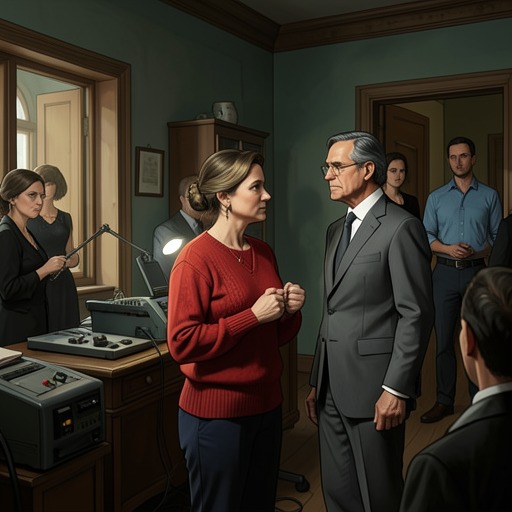
Grace had just ended a call about going to the station, hoping Captain Stuart Perlmutter might now believe what she had learned about the photograph. At that moment, Wu touched her shoulder and whispered that he had her husband. The promise of seeing Jack drew Grace into a trap, but Wu quickly made clear that her children were his leverage. With the school bell due to ring in a minute, he threatened to shoot them—and random children—unless she came quietly. Grace could not speak. The threat made the abduction more than a private confrontation: Wu placed a group of children in immediate danger to control her next move.
The Hidden Weapon and Jack’s Reappearance
When the abduction moved into the car, Grace Lawson was frightened but also possessed by an unusual calm: she believed the encounter might lead to answers. Eric Wu sat beside her and directed her along the road, unaware—or at least not yet acting on the fact—that she had a gun in her ankle holster. The weapon gave Grace a possible means of resistance, but not an easy one; her attention had to remain on Wu’s movements and on the danger he posed.
Grace managed to bring her arms around in front of her, but Eric Wu returned before she could turn that small gain into an escape. He stood only a few feet away and saw what she had done. Grace, however, was staring at his right hand. Wu let go, and Jack Lawson fell to the floor beside him. The sudden sight of Jack changed the immediate stakes: the missing husband Grace had been promised she would see was there, but still in the hands of the man controlling them.
Jack’s Resistance and Grace’s Escape
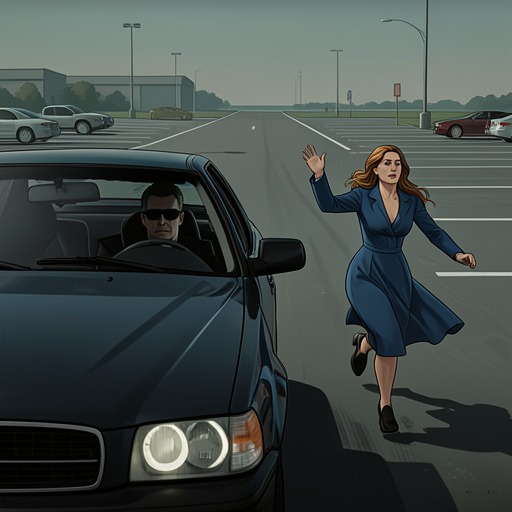
As Grace reached for the gun in her ankle holster, Eric Wu seized her knee and squeezed until pain nearly knocked her unconscious. Her hands fell uselessly away from the weapon. Then Jack Lawson rose from the back seat, though his hands and legs were bound and he appeared spent. He drove his forehead into Wu’s cheek, surprising him enough to make the car stop and release Grace’s knee. Jack’s shouted command, “Run, Grace!” gave her a moment to reach for the gun.
Wu recovered quickly, grabbing Jack by the neck and reaching again for Grace’s knee. Jack’s head sagged against Wu’s shoulder, seemingly lifeless, but he opened his mouth and bit down hard on Wu’s arm. Wu howled and shook him, then struck his head with his free hand until Jack slumped away. The resistance did not free Jack; it bought Grace another chance. She pulled the door handle and leaned against it, while Wu got out and reached for his own gun.
The choice that had begun as a struggle for access to her holstered weapon became immediate self-defense. Grace saw Wu reaching for his gun and pulled the trigger repeatedly. He staggered as sirens approached, but she fired again. The confrontation ended with both Lawsons needing emergency care: two ambulances arrived, and Jack was taken away before Grace could see him. Paramedics worked on her as she was strapped to a stretcher and wheeled toward an ambulance; Captain Stuart Perlmutter was there.
Consequences and Narrative Significance
The gunfire marks a decisive change in the balance of power, but not a clean escape from danger. Until Eric Wu reaches for his own weapon, Grace’s opportunity to act is repeatedly cut off by his control of her body and by Jack Lawson’s inability to overpower him. When that threat becomes immediate, the narration presents Grace’s response as stripped of deliberation: she does not pause to warn Wu or ask him to surrender. She fires, and keeps firing as he staggers and the sirens draw nearer. The scene’s moral pressure lies in that narrowing of choice: survival becomes an action taken under immediate threat, not a decision Grace can safely postpone.
The rescue remains physically and emotionally unresolved in its first moments. Two ambulances arrive, and Jack is carried away before Grace can see him; the man she has fought to reach is again removed from her sight, this time by emergency responders rather than her captor. Paramedics work on Grace and ask questions, but their words do not register. Strapped to a stretcher and wheeled toward an ambulance, she is present but unable to take in the scene around her. Captain Stuart Perlmutter is there, connecting the confrontation back to the investigation Grace had meant to bring to him, while the immediate aftermath shifts from pursuit of answers to urgent medical care.
The event’s central reversal is therefore partial but consequential. Jack’s bound, apparently spent body becomes an instrument of resistance, buying Grace the opening to reach her gun; Grace’s use of it ends Wu’s control over them, while leaving the Lawsons’ condition and reunion in the hands of the emergency response. The sequence turns the promise that Grace would see her husband into a brutal encounter, then makes that encounter the means by which she can act against her captor. Its ending offers neither an easy reunion nor a settled aftermath: it closes on sirens, separate ambulances, and Grace being carried away before she can know what has happened to Jack.